

8% of NDIS participants are First Nations People and are actively receiving NDIS support. Culturally safe, community-led support is more important while delivering the support services.
Navigating the NDIS for Aboriginal & Torrent Strait Islander participants can still feel overwhelming. To resolve it, NDIS introduces “NDIS First Nation Strategy 2025-2030”
“The NDIS First Nations Strategy forms the centrepiece of the NDIA’s reform agenda for improving outcomes for First Nations participants, their families and carers,” says CEO Rebecca Falkingham.
It is the 5-year roadmap designed by NDIS to help access NDIS support by First Nations People.
To help them access the right support, we are here! At Nascare Disability Support Services, we work closely with participants, families, and carers.
We help you understand NDIS plans, get the best NDIS supports, and help you make the most of the opportunities the NDIS offers.
NDIS for Aboriginal and Torres Strait Islander Communities
The NDIS isn’t the same for everyone, and for Aboriginal and Torres Strait Islander participants, it shouldn’t be.
First Nations people face challenges that go beyond forms and funding: remote locations, cultural differences, and support systems that don’t always fit their world.
Understanding culture, kinship, and community connections isn’t just a nice-to-have; it’s essential. NDIS supports that they receive needs to respect traditions, strengthen family ties, and work within the fabric of community life.
At Nascare, we have a deep understanding of how it is essential for you.
With us, you get guidance that actually makes sense for your world. And make sure the NDIS support plan works in harmony with the community and culture.
NDIS First Nations Strategy – Putting First Peoples First
The NDIS First Nations Strategy exists for one clear reason: to close the gap in access, experience, and outcomes for Aboriginal and Torres Strait Islander people with disabilities.
Its goal is to create an NDIS that is equitable, culturally safe, and led by First Nations voices, not shaped from the outside.
At the core, the strategy focuses on cultural responsiveness and community-led support. Make sure the services are designed with communities, not imposed on them.
Targeting programs for early intervention, life skills, and social inclusion. Focusing on building independence while staying connected to family, culture, and community.
It strengthens choice, control, and equity in access, so First Nation participants have the same opportunities to grow in their community.
Turn your goals into reality by best NDIS support in South Australia. Contact Nascare today!
What Makes This Strategy Different
This strategy begins with listening, not rules. Over the last 10 years, First Nations people with disabilities, their families, and communities have openly shared what works, what doesn’t, and what they need from the NDIS.
Built on co-design and self-determination, it reshapes the system to respect culture and deliver fair outcomes.

Eligibility and Access: How Aboriginal Participants Can Join the NDIS
Getting into the NDIS is the first step toward accessing the right support. However, the eligibility rules themselves are straightforward.
To be eligible for the NDIS, Aboriginal and Torres Strait Islander participants must:
- Be under 65 years of age at the time of application
- Be an Australian citizen, permanent resident, or Protected Special Category Visa holder
- Have a permanent or significant disability that affects daily activities, mobility, communication, or self-care
- Require ongoing support now or in the future
With the right guidance, meeting these criteria doesn’t have to be confusing, and that’s where the right support can make all the difference.
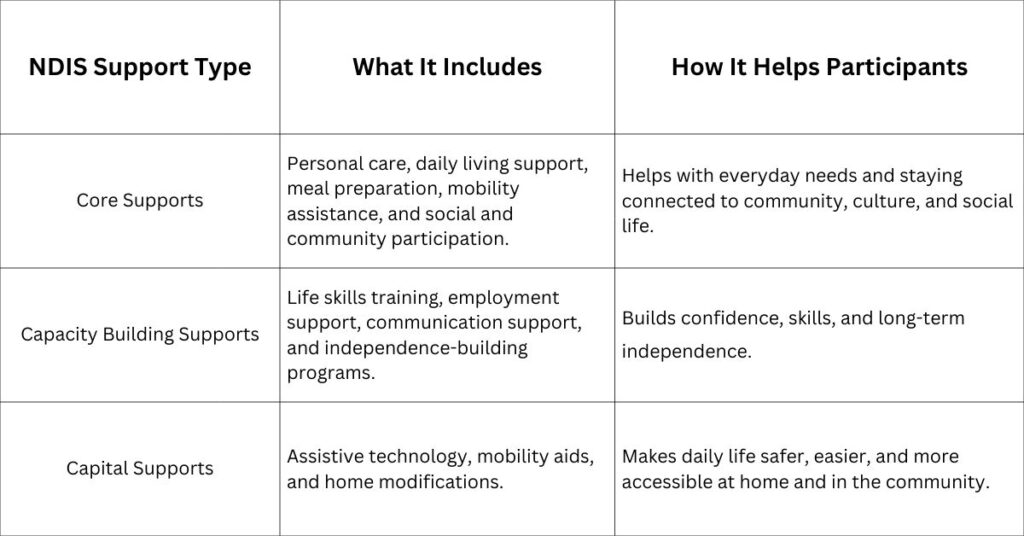
Types of NDIS Supports For First Nations People
The NDIS offers different types of support, each designed to help participants live more independently. There are three types of support in NDIS:
Role of the Registered NDIS Provider For First Nation Participants
The NDIS provider plays a huge role in making the system clearer, more respectful and easier to navigate. All while keeping culture, family, and choice at the centre.
Look how the NDIS provider helps by:
- Explaining NDIS plans in clear, simple language
- Delivering participants with culturally safe and trusted care
- Supporting participants in remote or regional areas to access services
- Helping to understand what supports can be used
- Working closely with families, carers, and community members
- Ensuring supports align with culture, kinship systems, and personal goals
At Nascare, we believe it’s about walking alongside participants with respect, understanding, and care.
Whether you live in a remote or very remote area, we are there to provide the support you need. To begin, contact us here or dial us at 1300 217 381.
Frequently Asked Questions
1. How do I access the NDIS in remote communities?
Even in remote areas, the NDIS is designed to reach you. Nascare can guide you and make sure your plan reflects your needs, culture, and community.
2. Who are Aboriginal and Torres Strait Islander people?
Aboriginal and Torres Strait Islander peoples are the First Nations peoples of Australia.
Aboriginal people have lived across mainland Australia for years. It is the world’s oldest culture living on the mainland (Aboriginal) and the island between Australia and Papua New Guinea.
Both communities have rich cultural traditions, languages, and connections to the country.
3. Can I choose culturally safe or Aboriginal-led service providers?
Absolutely. The NDIS encourages participants to select providers that are culturally safe, trusted, and community-led.


